
云知声 U1-OCR 能力实现再度进化,推出系列模型。
一、行业痛点破局:为什么OCR精度够了,下游依然“错乱”?
在真实业务场景中,文档解析的核心需求从来不止于“识别文字”。无论是论文、研报、教材、试卷等常见文档,还是各类复杂PDF,我们的系统不仅要完成文本识别,更会进一步理解页面中的结构组织关系,并精准还原符合人类阅读习惯的内容顺序。唯有明确两个核心问题——“这是什么区域”以及“这些区域应按什么顺序理解”,文档内容才能稳定支撑下游的信息抽取、检索、问答、知识入库等关键任务。
这也意味着,文档解析能力的关键,早已超越OCR识别精度本身,核心在于系统能否真正读懂页面结构与内容顺序。真实业务中的文档极少是线性纯文本,往往融合了标题、正文、图表、表格、页眉页脚、脚注、多栏排版等多种元素。若系统仅能完成文字识别,却无法精准判断版面结构与区域关联,就容易出现图文顺序错乱、标题与正文混淆、多栏内容串行、上下文错位等问题,进而影响字段抽取、知识入库和问答检索等任务的稳定性。
二、典型痛点具象化:复杂页面中的解析困境
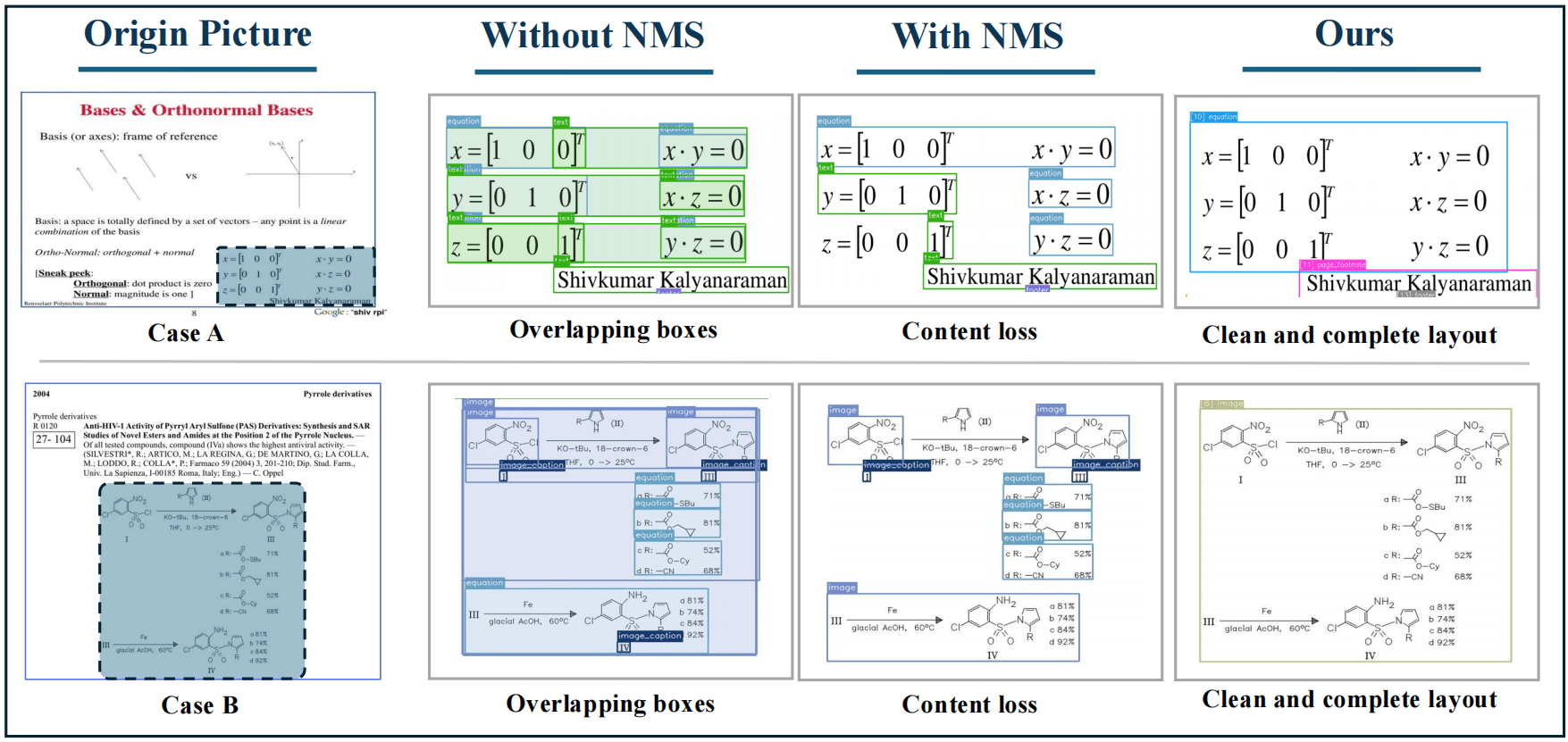
在复杂、密集的文档页面中,版面检测器往往会针对同一块内容,输出多个重叠、边界略有差异的候选框。表面上看系统“检测到了全部内容”,但这些候选框并非都能直接用于下游解析——真正重要的不是候选框的数量,而是最终保留的区域是否准确、完整,以及能否按正确顺序组织。
若不对这些候选框做处理,直接送入下游解析器(Parser),会导致内容重复、结构混乱,甚至打乱正常阅读顺序。传统行业内解决方案通常采用非极大值抑制(NMS)进行候选框去重,即在多个重叠区域中删除重复结果、保留一个候选框。但在真实复杂页面中,仅靠启发式NMS往往不够稳定:多个候选框虽指向同一内容,但完整性和定位质量存在差异,NMS只能完成“去重”,却未必能保留“最适合下游解析”的区域,反而可能误删定位更准、覆盖更全的区域。
结合实际应用场景,这一痛点表现得尤为突出:
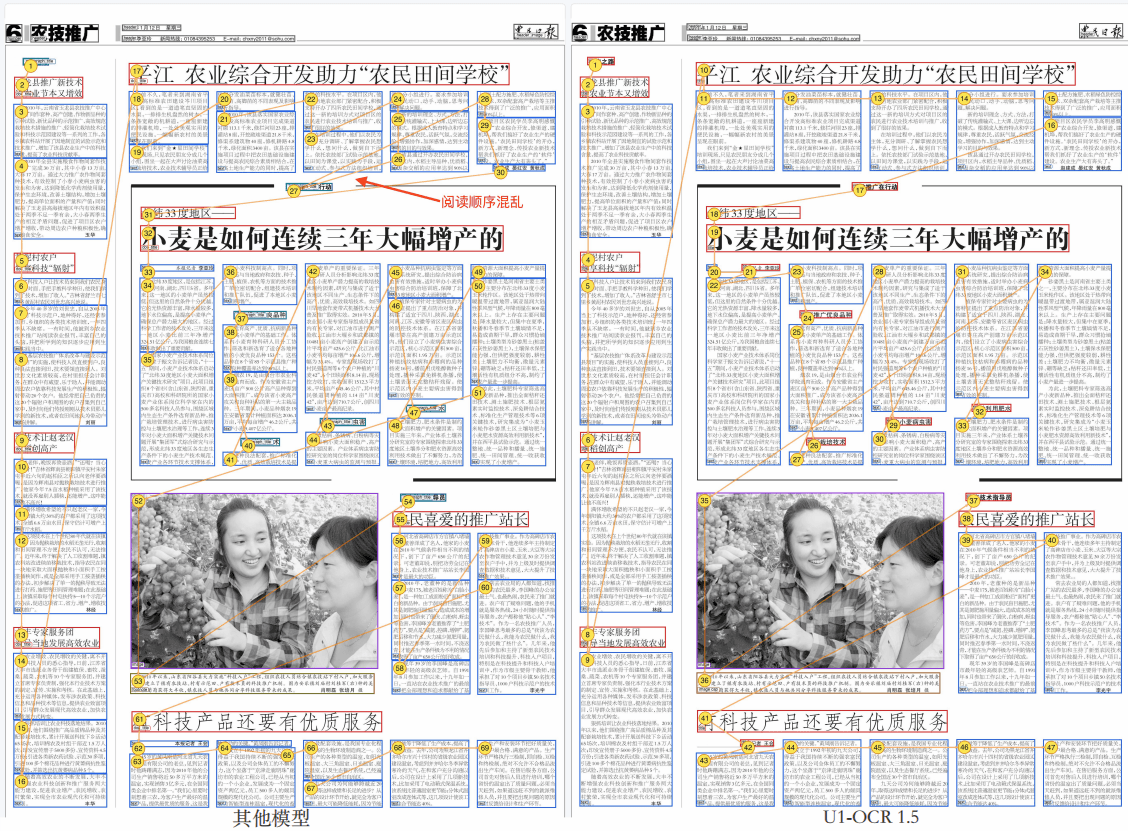
农业报刊版面中,报纸多栏排版的文章,系统阅读时会胡乱跨栏跳转,本该从上到下、从左到右阅读,结果经常左边读到一半跳到右边,再跳回左边,完全不符合人正常看报纸的顺序,阅读逻辑断裂。
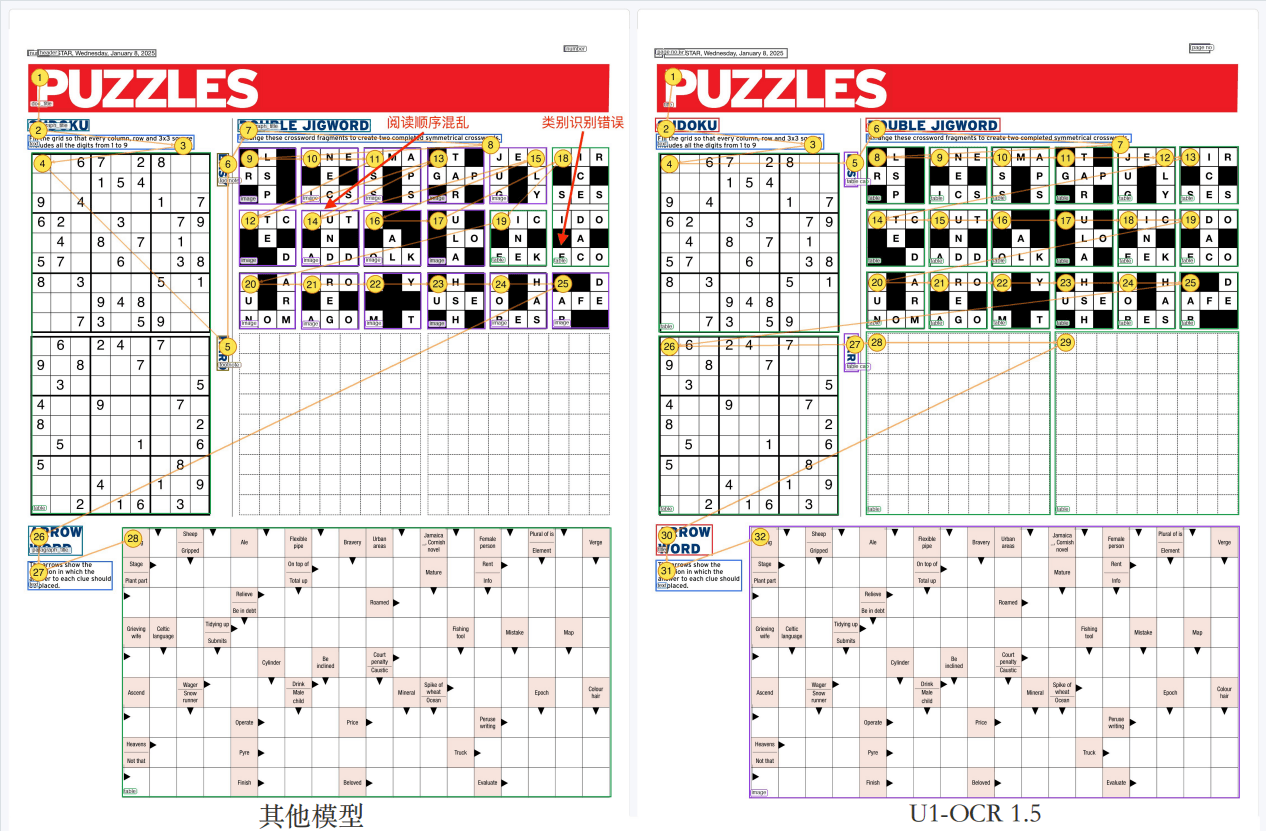
再以包含数独、拼字游戏与填字区域的高密度页面为例,这类页面元素繁杂、功能区域交错,对模型的布局理解能力提出了更高要求。
这类娱乐版面中,文字、游戏格子、题目说明挤在一起,系统分不清哪句话对应哪个游戏,经常把文字和格子错误绑定,还在不同游戏之间随意跳转,既读不通顺序,又认错内容归属。
这正是复杂文档解析的典型难点:问题不在于文字未被识别,而在于结构信息未被稳定整理,难以高效交付给下游模块。
三、破局思路:从“独立模块堆叠”到“统一结构假设池精修”
基于上述行业痛点,我们认为,复杂文档解析的核心突破点,不仅在于提升OCR识别精度或单点检测指标,更在于稳定检测器(detector)到解析器(parser)的结构交接过程。
传统方案通常将候选区域筛选、区域保留、阅读顺序恢复视为三个独立步骤:NMS负责去重,排序模块负责整理顺序。这种拆分式处理在简单页面中可正常工作,但在复杂页面中容易产生级联误差——排序建立在未稳定的候选集合上,一旦后续筛选改变保留区域,原有顺序就可能失效。
针对这一行业普遍存在的问题,我们在U1-OCR 中采用了面向复杂文档场景的解析设计:不再将检测器输出直接作为解析器可用的版面布局,而是将其视为“待精修的结构假设池”,在解析器交接前引入轻量级结构精修模块,对候选区域的保留、定位与顺序进行统一建模。最终,定位修正、实例保留和阅读顺序恢复从同一个精修状态中同步生成,下游解析器接收的是干净、有序的版面集合,而非仅经过启发式后处理的原始检测结果。
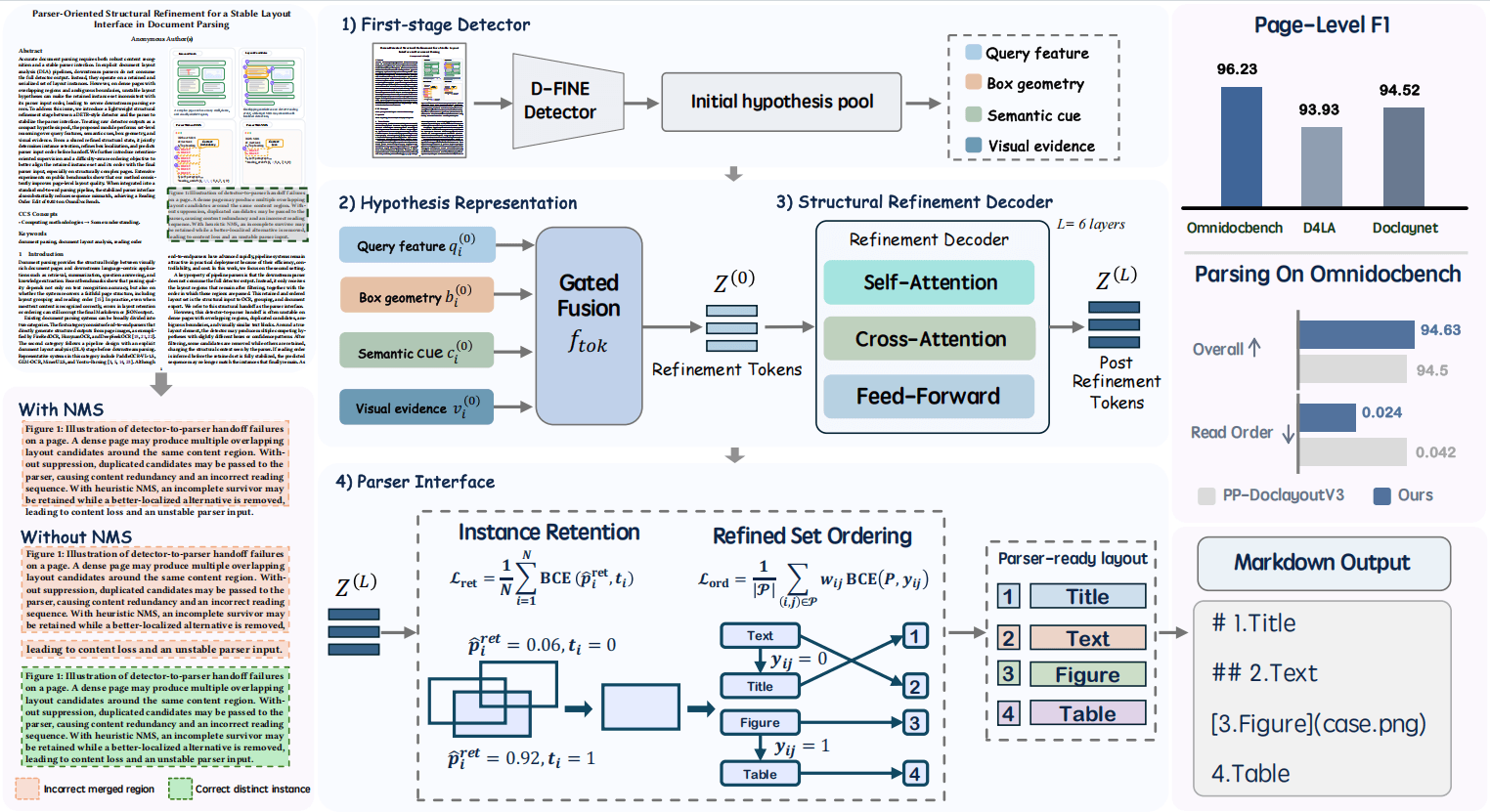
从本质上看,我们的这一设计可拆解为两个核心子任务:一是结构识别,即判断页面中每个区域的内容类型、确定需保留的区域;二是顺序推理,即规划保留区域的合理阅读路径。
四、核心技术解析:四大关键设计,筑牢技术壁垒
U1-OCR 文档解析的核心逻辑是:输入文档页面图像后,模型先通过第一阶段检测器生成初始候选假设池,再在解析器交接前进行统一结构精修——区别于传统方法依赖NMS决定候选区域去留,我们将检测器输出视为待精修集合,从中构造更稳定的解析器可用版面。其核心技术优势体现在四大关键设计上:
4.1 面向解析器接口的结构精修
U1-OCR 的核心不在于单独优化检测或排序的某个局部步骤,而在于重新建模检测器到解析器的交接过程。通过在解析器接口前引入轻量级精修阶段,让定位修正、实例保留与阅读顺序恢复在统一表示空间中完成,大幅提升最终结构接口的稳定性。
4.2 双向空间位置引导注意力
结构精修阶段采用双向空间位置引导注意力机制,联合建模候选区域之间的关系与图像证据。这一设计让当前候选区域的更新,不仅依赖自身局部视觉信息,还能结合其他候选区域的空间分布与全局版面布局,有效处理多栏排版、相邻文本块竞争、图文混排中的结构歧义,为后续实例保留与顺序恢复提供稳定基础。

4.3 保留导向监督
引入保留导向监督目标,让模型通过学习建模候选区域之间的结构竞争关系,而非依赖固定的IoU抑制规则决定区域去留,减少复杂页面中因机械过滤导致的内容缺失与结构破坏。

4.4 难度感知顺序约束
在阅读顺序恢复上,对保留实例的顺序关系进行建模,并引入难度感知加权,强化复杂区域之间的排序学习,让模型能在共享的精修结构状态上,恢复更一致的全局阅读路径,尤其适配跨栏、嵌套、图文混排等复杂版面。

五、实验验证:双数据集登顶,性能全面领先
为验证我们产品技术方案的有效性,我们从两个维度开展评测:一是采用pageIoU协议,独立评估最终保留版面集合的页面级结构质量;二是固定PaddleOCR-VL-1.5后端,仅替换前端版面分析模块,观察更稳定的检测器-解析器交接是否能提升端到端解析效果——核心关注阅读顺序相关指标的改善情况。本次评测覆盖两大权威数据集:OmniDocBench与D4LA。
5.1 主结果对比:结构理解能力跨数据集领先
实验结果显示,U1-OCR 在两大数据集上均取得最高F1分数,展现出强劲的版面结构理解能力与跨数据集泛化能力:
在OmniDocBench数据集上,我们的产品F1分数达96.23,优于PP-DocLayoutV3(96.03)、MinerU2.5(95.90)、dots.ocr v1.5(95.59)及PP-StructureV3(94.60);在D4LA数据集上,我们以93.93的F1分数登顶,领先dots.ocr v1.5(92.80)、MinerU2.5(90.20)、PP-DocLayoutV3(89.71)和PP-StructureV3(86.00)。
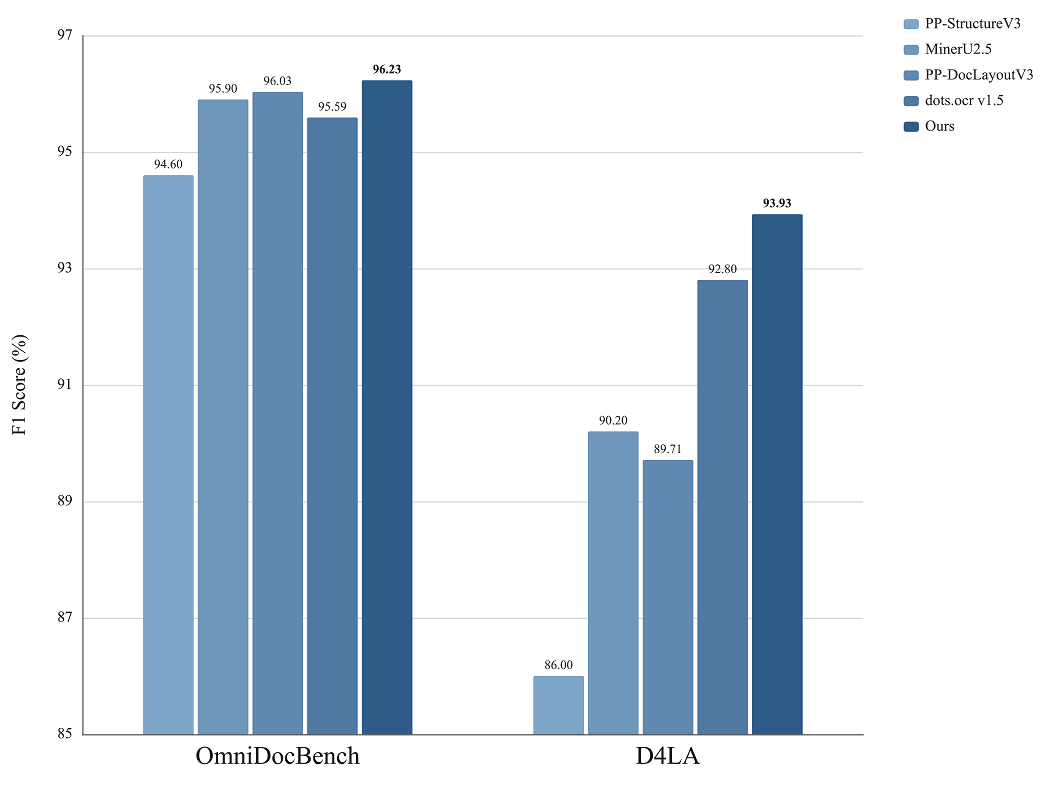
这一结果表明,在结构更复杂、布局变化更丰富的页面中,U1-OCR 能更高效地处理区域边界判定、类别区分与整体结构恢复问题,精准实现“将竞争候选假设稳定为解析器可用结构输入”的设计目标。(注:PP-DocLayoutV3为PaddleOCR-VL-1.5与GLM-OCR所使用的版面分析模块。)
5.2 OCR解析结果对比:阅读顺序恢复精度最优
在OmniDocBench数据集上,U1-OCR 同时展现出出色的综合解析能力与阅读顺序恢复能力:
从综合指标Overall来看,我们的产品以94.63的分数略高于GLM-OCR(94.62),优于PaddleOCR-VL-1.5(94.50)、dots.ocr v1.5(93.58)及Youtu-Parsing(93.22),彰显端到端文档解析的稳定竞争力;从阅读顺序核心指标Read Order Edit来看,我们取得0.024的最优结果(该指标越低越好),远优于Youtu-Parsing(0.026)、dots.ocr v1.5(0.029)、PaddleOCR-VL-1.5(0.042)和GLM-OCR(0.044)。
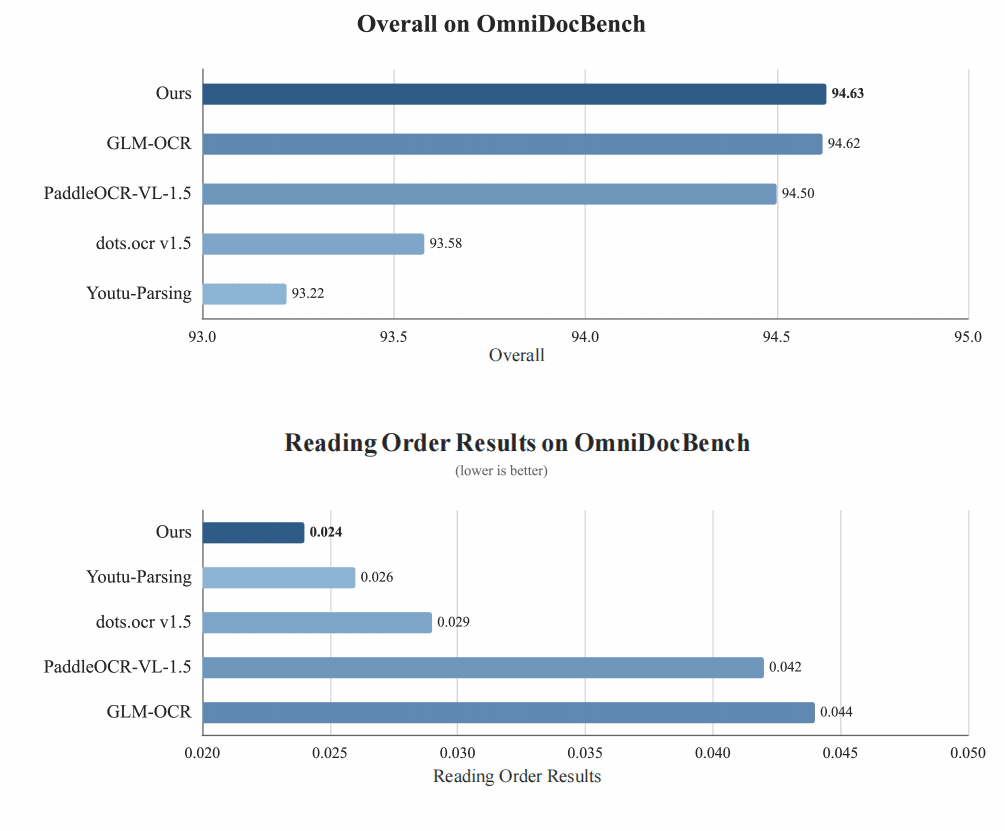
实验进一步证明,启发式NMS仅能缓解重复框问题,无法兼顾定位、保留与排序的一致性;而我们产品采用的统一精修方案,能在多个数据集上实现三者的结构平衡,在阅读顺序恢复上显著优于“检测后再接独立排序模型”的传统做法,也印证了产品技术的有效性。
从“OCR识别”到“文档理解”,赋能行业数字化升级
U1-OCR 的目标远不只是“把文字识别出来”,更要切实解决复杂文档页面中的结构理解与阅读顺序恢复难题。我们将文档解析拆解为“识别结构”和“梳理顺序”两大核心任务,围绕这两个任务设计专属关键技术,不仅在多个公开权威数据集上取得了领先成绩,更为真实业务场景中最容易被忽略的检测器与解析器交接环节(detector-to-parser handoff),提供了更稳定、更可靠的处理方式。相关论文结论也印证了这一点:优化解析器接口,是提升显式DLA流水线文档解析能力的切实有效路径。
这也意味着,文档解析正从单纯的OCR文字识别,升级为更贴合真实业务需求的文档理解能力。此次U1-OCR 全量上线云知声Token Hub大模型服务平台,同步开放标准化API和一键调用功能,将进一步降低文档智能技术的使用门槛,为医疗、交通、金融、教育等多个行业,提供高效、精准的文档解析服务,助力各行业顺利实现数字化转型升级。